Siding in San Jose
Handyman service · San Jose & the South Bay
Cracked, rotted, or missing siding lets water in and drags the whole exterior down. We repair and replace wood, fiber-cement, and shingle siding, then match the paint so the fix blends in.
What we handle
- Damaged siding board replacement
- Shingle siding repair
- Dry rot cut-out and replacement
- Trim and fascia repair
- Caulking and weather sealing
- Paint matching on repaired sections
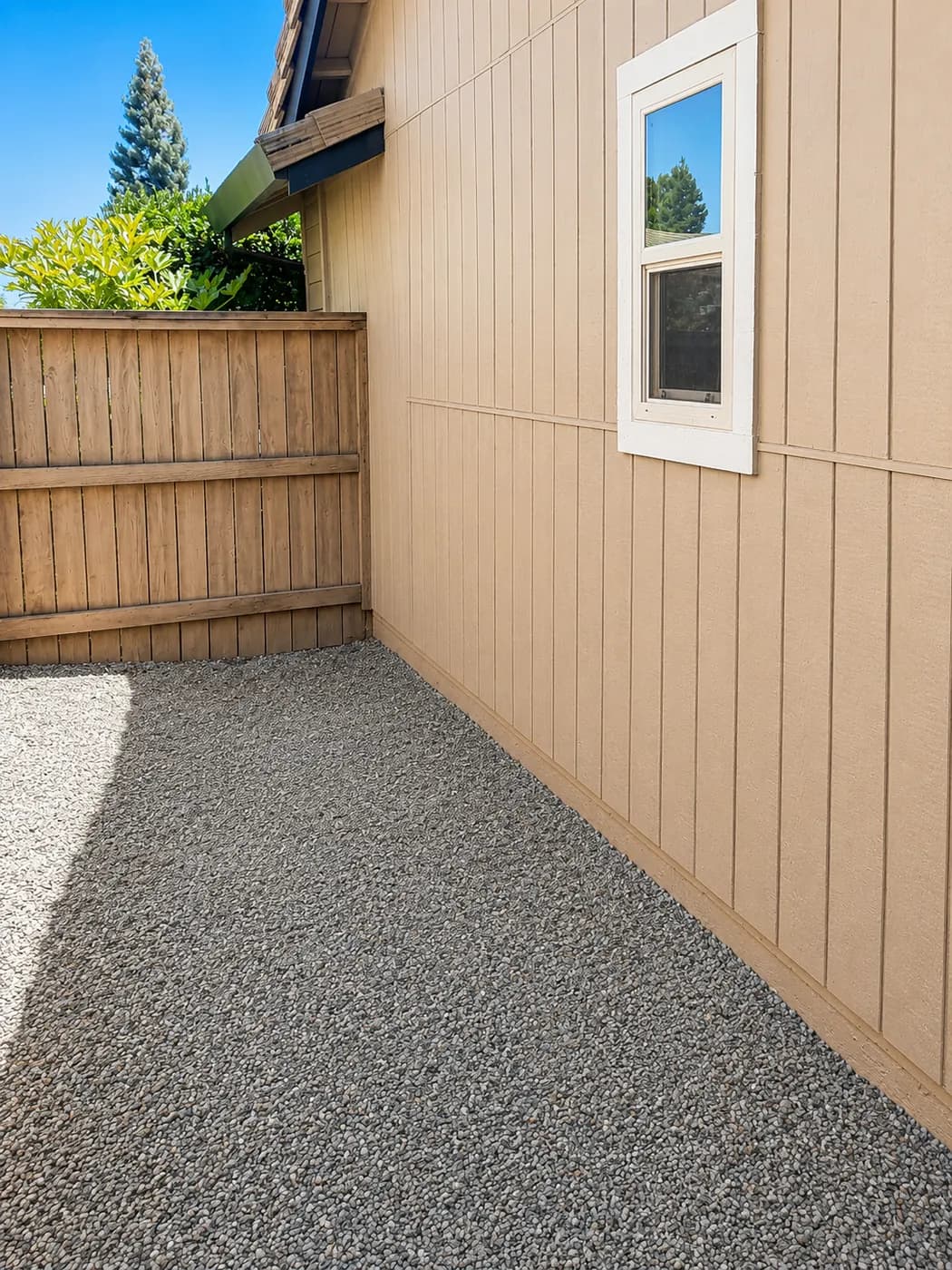
What separates a siding repair that lasts from one that fails by spring? Mostly the parts you'll never see. The damaged material gets replaced in kind — same profile, same thickness, same reveal — and the hidden faces get treated too. That's back-priming replacement boards, sealing cut ends and end grain, keeping proper flashing or building paper behind the patch, and nailing to the pattern the wall was built with. Then the paint gets matched and blended so the repair reads as wall, not as a patch. Cheap siding work has a familiar look: caulk troweled over rot instead of cutting it out, a board with the wrong groove pattern jammed into an Eichler wall, bare cut edges wicking up the next rain, and a rectangle of fresh paint that doesn't quite match. Water always finds the shortcut, usually within one winter.
The South Bay's housing stock puts a few siding failures on repeat. Eichler and other mid-century homes use grooved plywood panel siding that delaminates along its bottom edge where rain splash and sprinklers keep it wet — and the original profiles take some sourcing to match. Ranch homes from the 60s and 70s wear old-growth redwood lap siding that outlasts everything except neglected paint and irrigation overspray; once the coating fails, rot follows at butt joints and the bottom courses. Stucco homes crack at corners and around windows, and those hairlines let winter rain behind the shell. The pattern under nearly all of it is the same: dry all summer, then months of rain hitting wood that lost its protection years ago.
On a Raftermark siding job you'll get a clear scope: which boards or panels are coming off, what we expect to find behind them, and how the repair gets painted in. We probe past the visible damage before quoting, because rot almost never stops where it looks like it stops — and if we open the wall and find more, we talk to you before touching it. Replacement material gets primed on all sides, joints get flashed or sealed correctly, and the paint gets blended so the fix doesn't advertise itself. If the damage runs wall-to-wall or the whole house needs re-siding, that's a licensed contractor's project, and we'll say so plainly and point you in the right direction.
How we approach siding
- 1We probe the damaged area and the wall around it to find where the deterioration actually ends.
- 2We quote a firm scope — which boards or panels, what's behind them, and how the paint gets handled.
- 3We remove damaged siding, repair the moisture barrier behind it, and fix any surface rot in trim or sheathing.
- 4We install matched, back-primed replacement material with sealed cuts and correct nailing.
- 5We prime and paint the repair, blended into the existing color so it disappears.
Typical cost: $250 – $900 for most siding repairs. See the full pricing guide — every job gets a firm quote before work begins.
More siding projects
Siding — common questions
- Can you match my existing siding?
- Almost always. Standard lap and shingle profiles are easy; Eichler-style grooved panel siding takes more sourcing but is very doable — we've tracked down matches for most mid-century patterns in the South Bay. If an exact profile no longer exists, we'll show you the closest option and how we'll blend it before any work starts.
- How do I know if my siding damage is rot or just failed paint?
- Press on it — sound wood under bad paint feels solid, while rot gives, crumbles, or sounds dull when tapped. Peeling paint alone is a prep-and-repaint fix; softness means the wood itself is going and needs cutting out. We probe the area during the estimate and tell you exactly which one you're dealing with, and where it ends.
- Do you replace whole walls of siding?
- No — full re-siding of a wall or house is licensed-contractor scope, and we'll refer you to one rather than take on a project that size. Our lane is repairs: replacing damaged boards and panel sections, fixing the flashing and paper behind them, and blending paint. Most siding problems we see fall well within that.
- Why does siding rot at the bottom first?
- Because that's where water lives — rain splash off patios and soil, sprinkler overspray, and gravity pulling every drip down the wall to the bottom edge. Cut panel edges and board ends soak up water like a straw once paint fails. That's why we seal end grain and back-prime replacements, and why adjusting sprinklers is free advice we give a lot.
Need siding done right?
Tell us what needs doing and we'll get you a clear estimate.